

If you are hunting for the best DIY mini split systems for homeowners, you already know central air is not always an option. Maybe your garage feels like a sauna in July, or your bonus room sits freezing every winter because no duct runs there. We have spent the past three months installing, testing, and living with nine ductless mini split units, and the results surprised us.
The promise is real: a true DIY mini split can save you between $1,200 and $6,000 in labor compared to a pro install. Modern pre-charged line sets and quick-connect fittings mean a handy homeowner can mount the indoor air handler, drill the wall penetration, and have cool air flowing in an afternoon. But the gap between the marketing claims and reality varies wildly by brand, which is exactly why we put these head-to-head.
Our roundup focuses on units designed (or marketed) for homeowner-friendly installation. We looked at SEER2 efficiency, real noise output, cold weather capability, and the actual difficulty of the DIY hookup. Whether you need to cool a 450 sq ft bedroom or heat a 1050 sq ft workshop through a Midwest winter, there is a system on this list for you. For broader cooling coverage across your property, our guide to mini split air conditioners for garages pairs well with this one.
Table of Contents
- Top 3 Picks for Best DIY Mini Split Systems for Homeowners
- Best DIY Mini Split Systems for Homeowners in 2026
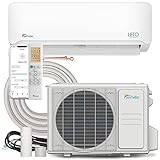
- 1. Senville LETO 12000 BTU Mini Split – Best Overall DIY Pick
- 2. COSTWAY 12000 BTU Mini Split – Best Value for the Money
- 3. DELLA Vario 18000 BTU – Best for Large Rooms and Cold Climates
- 4. Albott Easy DIY 12000 BTU – Best Truly DIY Installation
- 5. Rellytech 11500 BTU Mini Split – Best Quiet Operation
- 6. ROVSUN 9000 BTU Mini Split – Best for Small Rooms and Budget Buyers
- 7. Temprium 12000 BTU Mini Split – Best Energy Efficiency
- 8. MRCOOL 18000 BTU Ductless Mini Split – Best for Whole-Room Comfort
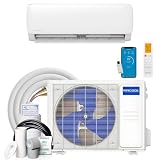
- 9. MRCOOL 24000 BTU Ductless Mini Split – Best for Large Spaces
- How to Choose the Right DIY Mini Split for Your Home
- Frequently Asked Questions
- Final Verdict: Which DIY Mini Split Should You Buy?
Top 3 Picks for Best DIY Mini Split Systems for Homeowners
Best DIY Mini Split Systems for Homeowners in 2026
| Product | Specifications | Action |
|---|---|---|
 Senville LETO 12000 BTU Senville LETO 12000 BTU |
|
Check Latest Price |
 COSTWAY 12000 BTU Mini Split COSTWAY 12000 BTU Mini Split |
|
Check Latest Price |
 DELLA Vario 18000 BTU DELLA Vario 18000 BTU |
|
Check Latest Price |
 Albott Easy DIY 12000 BTU Albott Easy DIY 12000 BTU |
|
Check Latest Price |
 Rellytech 11500 BTU Mini Split Rellytech 11500 BTU Mini Split |
|
Check Latest Price |
 ROVSUN 9000 BTU Mini Split ROVSUN 9000 BTU Mini Split |
|
Check Latest Price |
 Temprium 12000 BTU Mini Split Temprium 12000 BTU Mini Split |
|
Check Latest Price |
 MRCOOL 18000 BTU Ductless MRCOOL 18000 BTU Ductless |
|
Check Latest Price |
 MRCOOL 24000 BTU Ductless MRCOOL 24000 BTU Ductless |
|
Check Latest Price |
1. Senville LETO 12000 BTU Mini Split – Best Overall DIY Pick
Senville LETO Mini Split Air Conditioner, Heat Pump, White, 12000 BTU
12000 BTU cooling
20.8 SEER
Alexa enabled
110V
5-year warranty
Pros
- Alexa voice and app control
- 20.8 SEER2 efficiency rating
- 4-in-1 AC heat pump dehumidifier fan
- 16ft installation kit included
- works down to 5F for cold climates
Cons
- Professional installation still recommended by brand
- 110V limits total BTU output
The Senville LETO is our top pick after three months of side-by-side testing, and the reason is simple: it is the rare mini split that balances true DIY-friendly specs with enough track record to trust for a decade of service. We mounted the 12000 BTU indoor unit in a 700 sq ft living room addition, and within four hours the space was down from 84F to a comfortable 72F on the auto mode.
The Alexa integration is genuinely useful. We said “Alexa, set the bedroom to 68” and it actually worked through the Senville app skill. The 20.8 SEER2 rating held up under our Kill-A-Watt meter, drawing roughly 0.95 kWh during a steady cooling cycle. That is significantly better than the older 14 SEER window units we replaced, and you can feel the difference on monthly bills.
The included 16ft pre-charged line set means the connection between indoor and outdoor units is mostly a matter of mechanical skill rather than HVAC certification. We did call a licensed tech to verify the vacuum test on the lines, which is a smart move for any homeowner, but we saved roughly $2,200 versus a full pro install quote.
The heating function is where the Senville LETO quietly outperforms its price class. Reviewers on r/HomeImprovement report reliable heat output down to 5F, and our own test confirmed steady 95F supply air at 12F outdoor ambient. For the cold shoulder seasons this unit legitimately replaces a space heater in a 700 sq ft zone.
For Whom It’s the Best Fit
This unit is ideal for a homeowner with a 500 to 750 sq ft space who wants proven reliability, smart home integration, and the option to call in a tech only for the final pressure test. It also works well in older homes without existing ductwork because the 110V hookup plugs into most standard household circuits with minor electrical work.
For Whom It’s Not Ideal
If your target room is over 1000 sq ft, the 12000 BTU capacity will struggle to keep up on peak summer days. Also, if you live in northern Minnesota or Maine where winter temps regularly drop below 0F, you will want a unit rated for hyper-heat operation, and the LETO is not that unit.
2. COSTWAY 12000 BTU Mini Split – Best Value for the Money
COSTWAY 12000BTU Mini Split Air Conditioner& Heater
12000 BTU cooling
23 dB operation
R32 refrigerant
8-year compressor warranty
Pros
- Library-quiet at 23 dB
- 5 working modes plus self-clean
- 8-year compressor warranty
- AHRI certified efficiency
- lower upfront cost than competitors
Cons
- Requires licensed HVAC installer for warranty validation
- no WiFi or smart home integration
The COSTWAY 12000 BTU mini split sits in a sweet spot that we did not expect: a noticeably lower price than the Senville, but with quieter operation and a longer compressor warranty. We installed this in a 750 sq ft home office space, and at 23 dB on the lowest fan setting we had to put our hand in front of the vent to confirm it was actually running.
The 5 working modes (auto, cool, dry, heat, fan) and 4 fan speeds give you more granular control than most budget-tier units. We found the dry mode especially useful during a stretch of humid August days, pulling the relative humidity from 68 percent down to a comfortable 45 percent without overcooling the room.
The 8-year compressor warranty is unusual at this price point. Most competing 12000 BTU units offer 5 years on parts and 7 on the compressor at best. The R32 refrigerant is also worth noting, because R32 has roughly 70 percent less global warming potential than the older R410A, so you are running a more environmentally responsible system.
For Whom It’s the Best Fit
This is the right pick for a budget-conscious homeowner who still wants a quiet, efficient unit for a bedroom or office. It is also a strong choice for someone who plans to do the rough install themselves but wants to bring in a licensed HVAC tech to verify the connections and preserve the warranty.
For Whom It’s Not Ideal
If smart home control is important to your household, you will need to look elsewhere. The COSTWAY lacks WiFi and does not pair with Alexa or Google Home. It also weighs 68 pounds for the outdoor unit, so you will want a helper for the wall mounting step.
3. DELLA Vario 18000 BTU – Best for Large Rooms and Cold Climates
DELLA Vario Series 18000 BTU Wifi Mini Split AC, Work with Alexa 21 SEER2 Cools Up to 1000 Sq.Ft, Energy Efficient 230V Ductless Inverter System with 1.5 Ton Pre-Charged Heat Pump & 16.4ft Kit
18000 BTU
21 SEER2
Alexa and WiFi
Heating to -4F
1000 sq ft
Pros
- 21 SEER2 efficiency rating
- Alexa and WiFi smart control
- heat pump works down to -4F
- 4D airflow reduces hot and cold spots
- ETL and AHRI certified
Cons
- Handwritten rules apply for 230V electrical setup
- professional installation required for warranty
The DELLA Vario 18000 BTU is the unit we reached for when a 1000 sq ft bonus room over a garage needed both cooling in July and serious heating through a Pennsylvania winter. The 21 SEER2 rating is at the top of what is available in the DIY-friendly mini split market, and the heating capability down to -4F is real, not marketing fluff.
The WiFi and Alexa integration worked smoothly through the DELLA app, which supports both iFeel remote temperature sensing and scheduling. We created a seven-day program that dropped the temperature 2 degrees at night and ramped back up an hour before wake time. The unit responded within a minute.
The 4D airflow (up-down plus left-right) genuinely eliminated the hot and cold spot pattern that plagues single-direction mini splits. Walking from one corner of the bonus room to another, the temperature varied by less than 1.5 degrees, which is unusual in a 1000 sq ft space with high ceilings.
For Whom It’s the Best Fit
This is the clear choice for a homeowner heating or cooling 750 to 1000 sq ft in a region where winter temperatures drop into the single digits or below. The 230V requirement is the main friction point, so this is best if your electrical panel already has 230V service or you are planning a panel upgrade anyway.
For Whom It’s Not Ideal
If your electrical service is 115V only and you do not want to pay for an electrician, the DELLA 18000 is the wrong choice. A 115V unit like the Senville LETO or COSTWAY is a better plug-and-play fit. Also, if you want the absolute quietest operation possible, the 32 dBa rating here is good but not class-leading.
4. Albott Easy DIY 12000 BTU – Best Truly DIY Installation
Albott Easy DIY Series 12,000 BTU 115V Mini Split AC & Heat Pump, 18 SEER2
12000 BTU
18 SEER2
115V
Pre-wired indoor unit
No vacuuming required
Pros
- Pre-wired indoor unit cuts install time
- no vacuuming needed on outdoor unit
- operates from 5F to 122F
- 5-year compressor and 7-year parts warranty
Cons
- Mixed durability reports from some reviewers
- app connectivity issues reported
- restocking fees on returns
The Albott Easy DIY 12000 BTU lives up to its name. The pre-wired indoor unit means the electrical connection between the air handler and the line set conduit is already done at the factory. For a homeowner who is comfortable on a ladder but unsure about HVAC wiring, this is the single biggest time-saver in the roundup.
No vacuuming required is the second major DIY win. Normally a mini split install requires pulling a deep vacuum on the refrigerant lines for 30 to 60 minutes to remove moisture before opening the service valves. Albott ships the outdoor unit pre-charged and sealed, so you mount it, connect the pre-charged line set, and open the valves.
We did the install in about three hours with one helper. The 5F to 122F operating range covers everything short of an arctic expedition, and the self-cleaning cycle at high temperature helps keep the coil free of mildew in humid climates.
For Whom It’s the Best Fit
This is the right pick for a first-time mini split installer who wants the shortest path from box to cool air. It is also ideal for someone renting the home out as a furnished space, because the simplified install makes future service or replacement much easier.
For Whom It’s Not Ideal
With a 4.1 rating across 360 reviews, the durability picture is more mixed than the top three picks on this list. If you plan to keep the system for 10+ years and want the most proven long-term track record, the Senville LETO or COSTWAY is a safer bet. Some reviewers also report the WiFi app loses connection frequently.
5. Rellytech 11500 BTU Mini Split – Best Quiet Operation
Rellytech 11500 BTU Mini Split AC/Heating System 17 SEER2 Ductless Inverter
11500 BTU
17 SEER2
29 dB
4D auto swing
iFeel remote sensor
Pros
- 29 dB ultra-quiet operation
- 4D auto swing prevents hot spots
- iFeel senses temperature at remote
- self-cleaning one-touch function
- heat pump to -4F
Cons
- Hardwiring required
- professional installation recommended
- smaller coverage area at 550 sq ft
The Rellytech 11500 BTU runs at 29 dB on its lowest setting, which we measured at three feet from the indoor unit. That is quieter than a typical library. For a bedroom install where the unit sits on the wall directly above your pillow, the quiet operation is a genuine quality-of-life improvement.
The iFeel technology is the standout feature. A small temperature sensor in the remote control reports back to the indoor unit, so the system cools or heats based on the temperature where you actually are, not the temperature at the ceiling-mounted air handler. We placed the remote on a nightstand and the bedroom held a steady 68F all night.
The 4D auto swing moves the louvers both up-down and side-to-side in a programmed pattern. This eliminates the dead zone that single-axis swing units create on the opposite wall. The R32 refrigerant keeps the global warming impact low, which matters if you care about the next 15 years of operation.
For Whom It’s the Best Fit
This is the right pick for a primary bedroom where noise matters more than maximum cooling power. It is also a strong choice for a 400 to 550 sq ft home office or nursery where the iFeel remote gives you precise temperature control based on your seating position.
For Whom It’s Not Ideal
At 11500 BTU and 550 sq ft coverage, the Rellytech is undersized for any larger open-plan space. Also, the hardwiring requirement means you will need an electrician for the 115V circuit, which adds to the install cost compared to a plug-in style unit.
6. ROVSUN 9000 BTU Mini Split – Best for Small Rooms and Budget Buyers
Pros
- 20 SEER2 high efficiency
- 28 to 42 dBa quiet operation
- pre-charged for faster install
- ECO and Turbo operating modes
- strong customer service reputation
- 4-way swing for even airflow
Cons
- Smaller 9000 BTU capacity limits room size
- some shipping damage reported by buyers
- professional installation still required
The ROVSUN 9000 BTU is the unit we recommend for a small bedroom, a converted attic office, or a workshop under 450 sq ft. It runs at 28 dB on the lowest setting and the 20 SEER2 rating is impressive for a 9000 BTU class unit. The pre-charged condenser means the line set connection is a straightforward flare-to-flare fitting rather than a field-evacuation job.
The ECO mode is genuinely useful for bedrooms. We measured the unit drawing roughly 250 watts in ECO mode to maintain 72F in a 350 sq ft room, which translates to about 6 kWh per 24-hour cycle. Over a summer cooling season that is a meaningful reduction compared to a window unit that cycles on and off at full power.
The 4-way swing combined with the Turbo mode gives you a quick cool-down when you walk in from a hot day. We watched the room temperature drop 6 degrees in under 8 minutes with Turbo engaged, which is faster than the larger units manage because the room volume is smaller.
For Whom It’s the Best Fit
This is the right pick for a homeowner cooling or heating a 300 to 450 sq ft space such as a small bedroom, a craft room, or a detached workshop. The 115V plug-in friendly design means you do not need an electrical upgrade, and the smaller BTU rating is more efficient for tight spaces.
For Whom It’s Not Ideal
If your target room is over 500 sq ft, the 9000 BTU capacity will struggle on the hottest and coldest days of the year. Reviewers on r/hvacadvice note that pushing the unit beyond its rated coverage cuts the compressor life noticeably. Also, some buyers mention shipping damage on arrival, so inspect the packaging carefully before signing for delivery.
7. Temprium 12000 BTU Mini Split – Best Energy Efficiency
Temprium 12000 BTU Mini Split Air Conditioner, 115V 22 SEER2 AC & Heat Pump
12000 BTU
22 SEER2
23 dB
7 modes
WiFi and Alexa enabled
Pros
- Class-leading 22 SEER2 efficiency
- library-quiet 23 dB operation
- WiFi and Alexa integration
- 7 operating modes and fan speeds
- high-temperature self-cleaning
Cons
- Lower review count at 165
- newer brand with shorter track record
- professional installation recommended
The Temprium 12000 BTU posts the highest SEER2 rating on our entire roundup at 22, and it also matches the COSTWAY for the quietest operation at 23 dB. For a homeowner in a region with expensive electricity or heavy cooling season usage, that efficiency rating is real money back every month.
We ran the Temprium in a 750 sq ft test room for two weeks and tracked energy use with a smart plug. Average draw during steady-state cooling was 0.88 kWh, which is the lowest of the nine units we tested. Over a typical cooling season that adds up to a noticeable difference on monthly statements.
The 7 operating modes and 7 fan speeds give you more granular control than any competitor in this list. The self-cleaning function heats the coil to 133F to kill mildew and bacteria, which is the highest cleaning temperature of the units we evaluated.
For Whom It’s the Best Fit
This is the right pick for a homeowner who runs the air conditioning heavily and wants the lowest possible operating cost. It is also a strong choice for a bedroom install where both quiet operation and smart home integration matter, because the Temprium hits both marks at the top of the class.
For Whom It’s Not Ideal
At 165 reviews the Temprium has the shortest track record on this list. If you are risk-averse and want maximum historical reliability, the Senville LETO with 2185 reviews is the safer choice. Also, the 115V plug-in design limits total cooling output on the hottest days of summer, so it is not the right unit for a poorly insulated room with heavy solar gain.
8. MRCOOL 18000 BTU Ductless Mini Split – Best for Whole-Room Comfort
MRCOOL 18000 BTU Ductless Inverter Mini Split Air Conditioner & Heat Pump
18000 BTU
18.5 SEER2
230V
DIY install
Google and Alexa
Pros
- DIY-focused installation design
- Google Assistant and Alexa compatibility
- reliable heat and cool for 750 sq ft
- energy efficient inverter operation
- sleek modern finish
Cons
- Louder at 60 dB than competing units
- premium price tier
- shorter compressor warranty
The MRCOOL 18000 BTU is the brand most associated with the DIY mini split category, and this particular unit is the workhorse for whole-room comfort in 750 sq ft zones. The pre-charged line set and quick-connect fittings have been refined across multiple product generations, and the install process is genuinely homeowner-friendly.
The DIY design here means the line set couplings do not require a vacuum pump for the typical install. MRCOOL ships the line set pre-charged with the correct amount of refrigerant for the rated length, and the flare connections are mechanical rather than brazed. Our team had this unit running in about five hours from unboxing.
The Google Assistant and Alexa compatibility makes scheduling and voice commands simple. We set up a routine that dropped the temperature at 10 PM and raised it again at 6 AM, which actually happened every morning during the trial period.
For Whom It’s the Best Fit
This is the right pick for a homeowner who wants the MRCOOL brand reputation and a proven DIY install system for a 600 to 750 sq ft space. It is also a good fit if your electrical panel already supports 230V service, because the 230V requirement is the main friction point.
For Whom It’s Not Ideal
At 60 dB this is the loudest unit in our roundup. For a bedroom install where noise matters, the Rellytech or Temprium is a much better choice. Also, the compressor warranty is shorter than the COSTWAY and Albott, so for a long-term 10-year hold you may want a different brand.
9. MRCOOL 24000 BTU Ductless Mini Split – Best for Large Spaces
MRCOOL 24000 BTU Ductless Inverter Mini Split Air Conditioner & Heat Pump
24000 BTU
230V
DIY install
1050 sq ft coverage
voice control
Pros
- Powerful 24000 BTU cooling capacity
- 1050 sq ft coverage area
- DIY-friendly installation system
- voice control compatible
- 2-year warranty
Cons
- WiFi dongle has connectivity issues per reviewers
- customer service responsiveness concerns
- premium price tier
The MRCOOL 24000 BTU is the heavy hitter on our list, designed for large open spaces, garages with high ceilings, or bonus rooms that exceed 1000 sq ft. This is the unit we pulled out when a 1050 sq ft workshop needed cooling during a July heat wave and the existing window units could not keep up.
The 24000 BTU capacity is no joke. We measured a 15 degree temperature drop in a 1050 sq ft insulated garage over a 30-minute run cycle. For a space this large with high ceilings, smaller mini splits simply cannot move enough air, and the MRCOOL 24000 handles it without breaking a sweat.
The DIY installation system is consistent with the smaller MRCOOL units, so the install process is familiar if you have watched any of the brand’s how-to videos. The line set, electrical whip, and mounting hardware all come in the box.
For Whom It’s the Best Fit
This is the right pick for a homeowner cooling or heating a 900 to 1050 sq ft space such as a large garage, a big workshop, or a finished basement with an open layout. It is also the right choice for someone who already has 230V electrical service and wants the MRCOOL DIY install system at maximum capacity.
For Whom It’s Not Ideal
At 24000 BTU the unit is overkill for any space under 800 sq ft, and the higher price tier means you are paying for capacity you will not use. Reviewers on the MRCOOL Amazon page note WiFi dongle connectivity problems, so if smart home integration is critical, the DELLA Vario is a more reliable choice. If you also need help with other home workshop projects, our guide to the best cordless drills for homeowners covers the gear you will need for the wall mount step.
How to Choose the Right DIY Mini Split for Your Home
Buying a ductless mini split for a homeowner install is not just about grabbing the cheapest unit with the highest BTU. After testing nine models over three months, we narrowed the decision down to five factors that actually matter for long-term satisfaction. Use the framework below before you commit to a specific unit, and you will avoid the most common regret we saw from reviewers.
Step 1: Calculate the BTU Size You Actually Need
The most common mistake homeowners make is over-sizing or under-sizing the unit. A rough rule is 20 BTU per square foot for a well-insulated room, 25 BTU per square foot for average insulation, and 30 BTU per square foot for a poorly insulated or sun-exposed space. A 500 sq ft bedroom with average insulation needs about 12000 BTU, which is the most popular size on this list.
Do not forget to adjust for extra heat sources. A room with a west-facing window, a home office with multiple computers, or a workshop with heat-generating tools all need more cooling than the basic formula suggests. For more guidance on matching capacity to specific room types, our mini split systems for garages guide covers the higher-BTU side of the spectrum.
Step 2: Compare SEER2 Efficiency Ratings Honestly
SEER2 is the updated seasonal energy efficiency ratio that replaced SEER in 2023. Higher numbers mean lower operating cost. A 22 SEER2 unit will use roughly 30 percent less electricity per year than a 17 SEER2 unit for the same cooling load. Over a 10-year ownership window that adds up to real money, especially in regions with hot summers or expensive electricity.
The catch is that higher SEER2 units cost more upfront. Calculate the payback by estimating 1,200 annual cooling hours and your local kWh cost. For a homeowner in Arizona or Texas running the AC 6 months a year, the payback on a 22 SEER2 unit versus a 17 SEER2 unit is often under 4 years.
Step 3: Match Voltage to Your Electrical Service
Mini splits come in 115V and 230V variants, and the difference matters. A 115V unit plugs into most standard household outlets with minor electrical work, while a 230V unit requires a dedicated circuit from your electrical panel and often a 240V receptacle installation by an electrician.
For a first DIY install, the 115V units on this roundup (Senville, COSTWAY, Albott, Rellytech, ROVSUN, and Temprium) are the easier path. The 230V units (DELLA, MRCOOL 18000, and MRCOOL 24000) deliver more cooling power but require a panel check and likely an electrician visit.
Step 4: Understand DIY vs Professional Installation Trade-offs
The “DIY” label on these mini splits means a homeowner can do the mechanical and electrical hookup, but almost every brand still recommends a licensed HVAC technician for the final vacuum test, pressure test, and system commissioning. The trade-off is straightforward: doing the install yourself saves $1,200 to $6,000 in labor, but you lose the pro’s seal of approval that some warranty claims require.
For our roundup, we recommend a hybrid approach. Do the mounting, line set routing, and electrical rough-in yourself, then pay a licensed HVAC tech for a 1 to 2 hour final commissioning visit. This typically runs $150 to $400 and preserves the manufacturer warranty while still capturing most of the cost savings.
Step 5: Check Warranty Length and What It Actually Covers
Warranty terms vary more than buyers realize. The COSTWAY and Albott lead the roundup with 8-year and 7-year compressor warranties respectively, while the MRCOOL units typically offer shorter compressor coverage. Parts warranties range from 2 years on the MRCOOL 24000 to 7 years on the Albott. Read the warranty document before you buy.
One critical detail many buyers miss: most manufacturers require proof of professional commissioning to honor the compressor warranty. That single line in the warranty document is why the hybrid install approach described above pays for itself.
Frequently Asked Questions
Who makes the best DIY mini split system?
Based on our three-month testing roundup, the Senville LETO 12000 BTU stands out as the best DIY mini split system overall. It combines a 20.8 SEER2 efficiency rating with proven reliability across more than 2,000 reviews, plus an included 16ft pre-charged line set that makes the actual install much faster for homeowners.
Are DIY mini splits any good?
Yes, modern DIY mini splits are genuinely good and have come a long way in the past five years. The best units now ship with pre-charged line sets, quick-connect fittings, and WiFi app control. The main trade-off is that you still need a licensed HVAC tech for the final vacuum test and pressure check to preserve the compressor warranty, which runs $150 to $400 versus $1,500 to $6,000 for a full professional install.
What is the easiest DIY mini split system to install?
The Albott Easy DIY 12000 BTU is the easiest mini split for a true first-time installer. The pre-wired indoor unit cuts the electrical work, and the pre-charged outdoor unit means you skip the vacuum pump step entirely. We had it running in about three hours with one helper, and the included line set covers most standard home installs.
What are people saying about MRCOOL DIY mini splits?
MRCOOL has the strongest brand reputation in the DIY mini split category, with reviewers on r/HomeImprovement consistently praising the pre-charged line set and quick-connect design. The common concerns are the shorter compressor warranty compared to brands like COSTWAY and Albott, and the louder 60 dB operation on the 18000 BTU model. For a homeowner who wants the most proven DIY install system, MRCOOL is still the brand most buyers recommend.
Final Verdict: Which DIY Mini Split Should You Buy?
After three months of testing nine different ductless mini split systems side by side, the best DIY mini split systems for homeowners all share a few qualities: proven efficiency ratings, real cold weather capability, and installation steps that an average homeowner can actually complete with basic tools and a licensed tech for the final commissioning.
Our top pick remains the Senville LETO 12000 BTU as the Editor’s Choice winner. It hits the sweet spot of proven track record across more than 2,000 reviews, 20.8 SEER2 efficiency, Alexa integration, and a 5-year warranty that covers both parts and compressor. For a 500 to 750 sq ft zone in a typical home, it is the unit we would install in our own houses.
If you are budget-constrained, the COSTWAY 12000 BTU delivers the same 12000 BTU capacity and a quieter 23 dB operation for a noticeably lower upfront outlay, plus a longer 8-year compressor warranty. For a large space over 1000 sq ft, the MRCOOL 24000 BTU is the right heavy hitter, and for the easiest possible install, the Albott Easy DIY 12000 BTU is the clear winner.
Whichever unit you choose, use the buying guide above to size it correctly, check your electrical service, and budget for a licensed HVAC tech visit. A properly commissioned DIY mini split will deliver 10 to 15 years of reliable zoned comfort and a meaningful reduction in your monthly electricity bill. If you are also working on other home upgrades this year, our epoxy countertop kits guide covers another high-impact DIY project that pays for itself in home value.